

How GPHJ and GPHG shape authority, desirability, and long-term brand value.
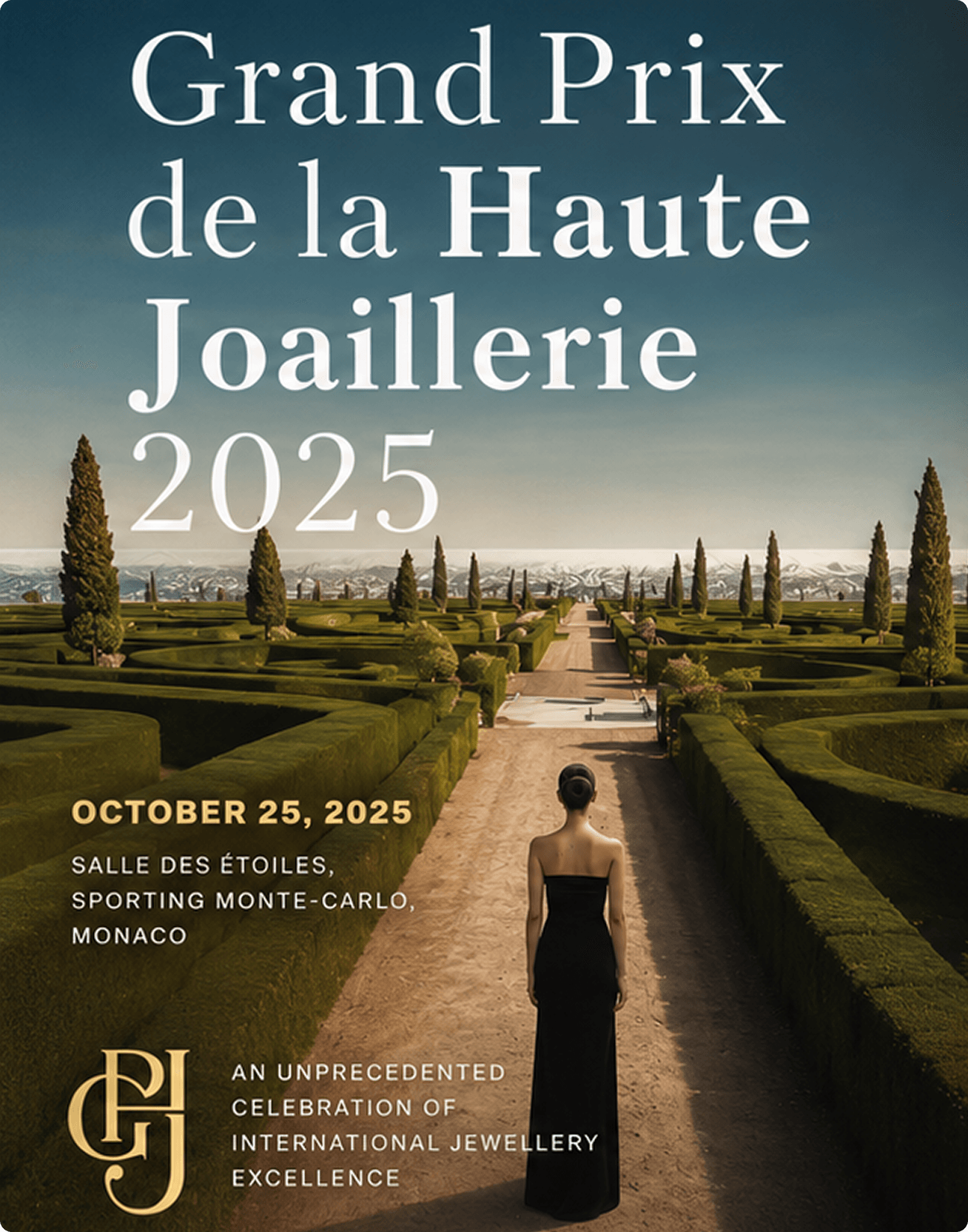
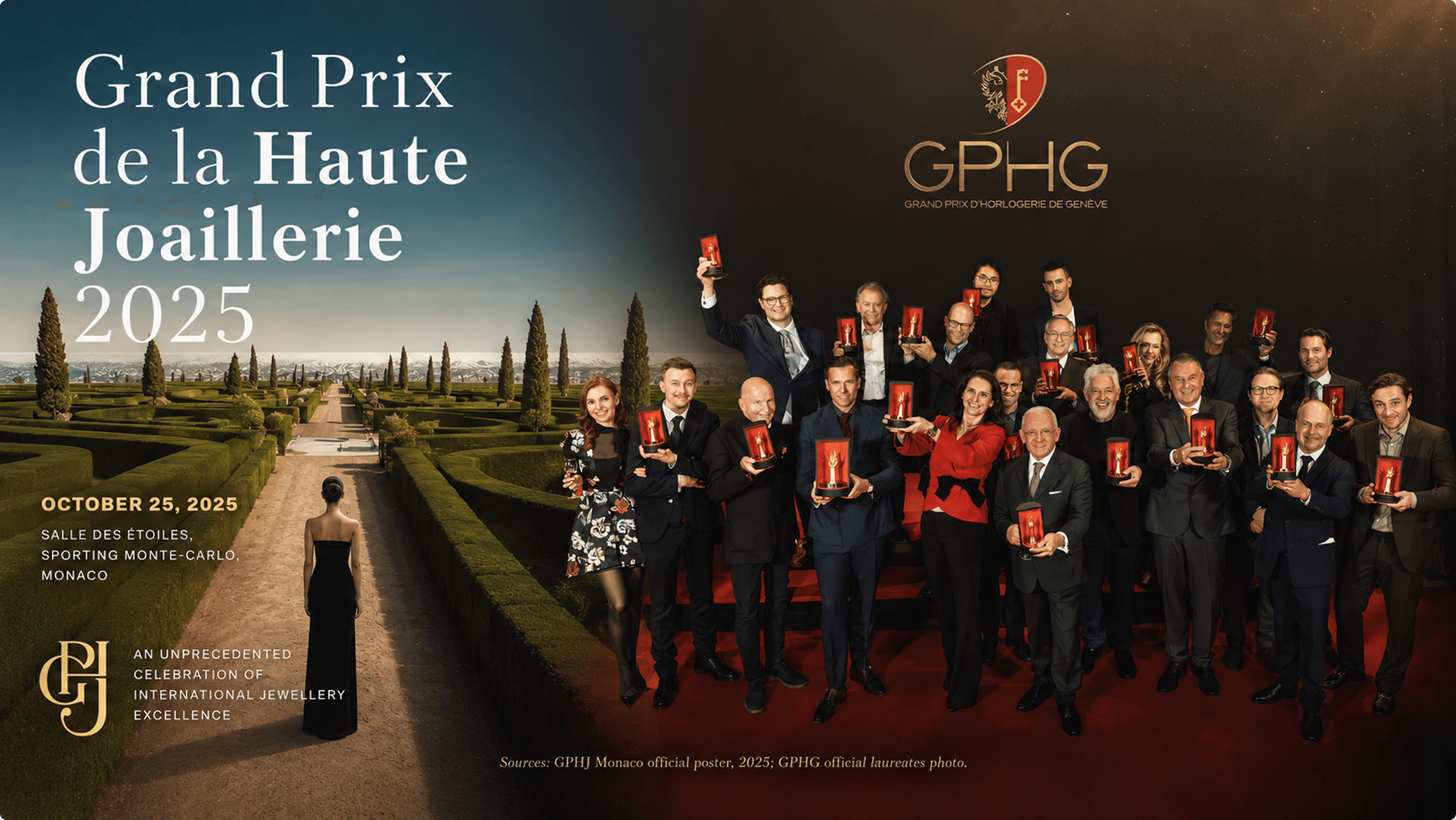
On the evening of 25 October 2025, the Salle des Étoiles in Monaco filled with the most revered names in jewellery for the first-ever Grand Prix de la Haute Joaillerie.1
Yet the decisions that mattered had already been made, weeks earlier and far from the cameras — in Paris, where an independent jury examined the finished pieces and performed the single task no marketing budget can perform for a brand: deciding whether the work was excellent.
That distinction — between what can be bought and what must be earned — is the argument of this essay. The world has never been more heavily advertised, and the saturation has made advertising worth less, not more. A campaign rents attention; an award confers authority. For the houses that competed in Monaco, and for those that walk the stage in Geneva at the Grand Prix d’Horlogerie de Genève, the laurel is not a marketing asset. It is the thing marketing cannot manufacture.
01 THE TRUST NO LONGER EXTENDED TO ADVERTISING
Start with the uncomfortable truth about paid media. Across decades of Nielsen’s global research, the most trusted influence on a purchase has never been an advertisement — it is recommendation. Roughly 83 to 84% of consumers worldwide say they trust the word of people they know above any paid format, and when the question is framed as recommendations from people they know, trust climbs past 90%.2 Paid channels sit far below that line, and trust in traditional advertising has been eroding for years.3 The more the world is saturated with messages a brand pays to place, the more readily people discount them.
An award belongs to the other category. A jury’s verdict is not a brand talking about itself; it is a credible, independent third party vouching for it — far closer to a trusted recommendation than to a billboard. That is precisely why it carries weight a campaign cannot buy. When Chanel took the inaugural Grand Prix in Monaco for its Sweater necklace, or when Breguet’s Classique Souscription 2025 won the “Aiguille d’Or” in Geneva, the value of those wins lay in who conferred them.4
An advertisement is a brand’s opinion of itself. An award is someone else’s — and that is the entire difference.
02 WHAT AN AWARD ACTUALLY CERTIFIES
The reason the verdict means something is the rigour behind it. These are not popularity contests dressed in evening wear. To enter the GPHJ, a house had to submit pieces that were unique, crafted within a defined window, set exclusively with natural stones — no synthetics — in 18-, 22-, or 24-carat gold or platinum, each carrying a public price of at least €100,000.5 The finished works were examined by the jury in Paris before the public ever saw them. The Geneva watch prize is older and even more codified: founded in 2001, run by a public-interest foundation under the oversight of the Canton of Geneva, with a preselection Academy of more than a thousand members feeding a final jury.6 It is widely regarded as the most prestigious award in the watch world, and its independence from any single brand is the source of its authority.7
This is what separates a genuine prize from a paid placement: a brand can buy a magazine cover, a sponsorship, a front-row seat. It cannot buy the Aiguille d’Or, and it cannot buy a Grand Prix from a jury that has just told ten of its rivals no. The award is a certification of merit issued by people with reputations of their own to protect. That scarcity of approval is exactly what gives it value.
03 HOW RECOGNITION BECOMES AUTHORITY,
AND AUTHORITY BECOMES DESIRE
Luxury has always obeyed a different logic from ordinary commerce. As Jean-Noël Kapferer and Vincent Bastien argued in their study of the field, building a luxury brand means inverting the rules of conventional marketing — leading with dream, heritage and rarity rather than with persuasion and price.8 Desire in this world is not generated by repetition; it is conferred by recognition. The rarer and more credibly endorsed an object, the more it is wanted — and the more a buyer will accept that its price is justified. Survey after survey of luxury consumers places brand image at the centre of the decision, with the majority treating a strong image as essential and premium pricing as legitimate rather than excessive.9
An award feeds directly into that machinery. It becomes part of an object’s provenance — a line in its story that travels from the vitrine to the auction catalogue, deepening both desirability and long-term value. And it does something advertising structurally cannot: it levels the field. A small atelier has no hope of out-spending a global maison, but on the jury’s table it can out-create one. That is how a newcomer’s necklace can be honoured beside Chanel’s, and how an independent watchmaker can stand on the same stage as a 250-year-old house.10 For brands without billboards, recognition is the great equaliser.
04 WHY THE JURY’S EYES MATTER — AND WHOSE WERE IN THE ROOM
If an award’s power comes from who confers it, then the composition of the jury is not a detail. It is the institution. And here the luxury world is being quietly reshaped. The centre of gravity of desire has moved — a vast share of high jewellery and haute horlogerie is now dreamed of, debated, and bought across Asia. An institution that aspires to define global excellence cannot canonise it through a single cultural lens and expect its authority to hold.
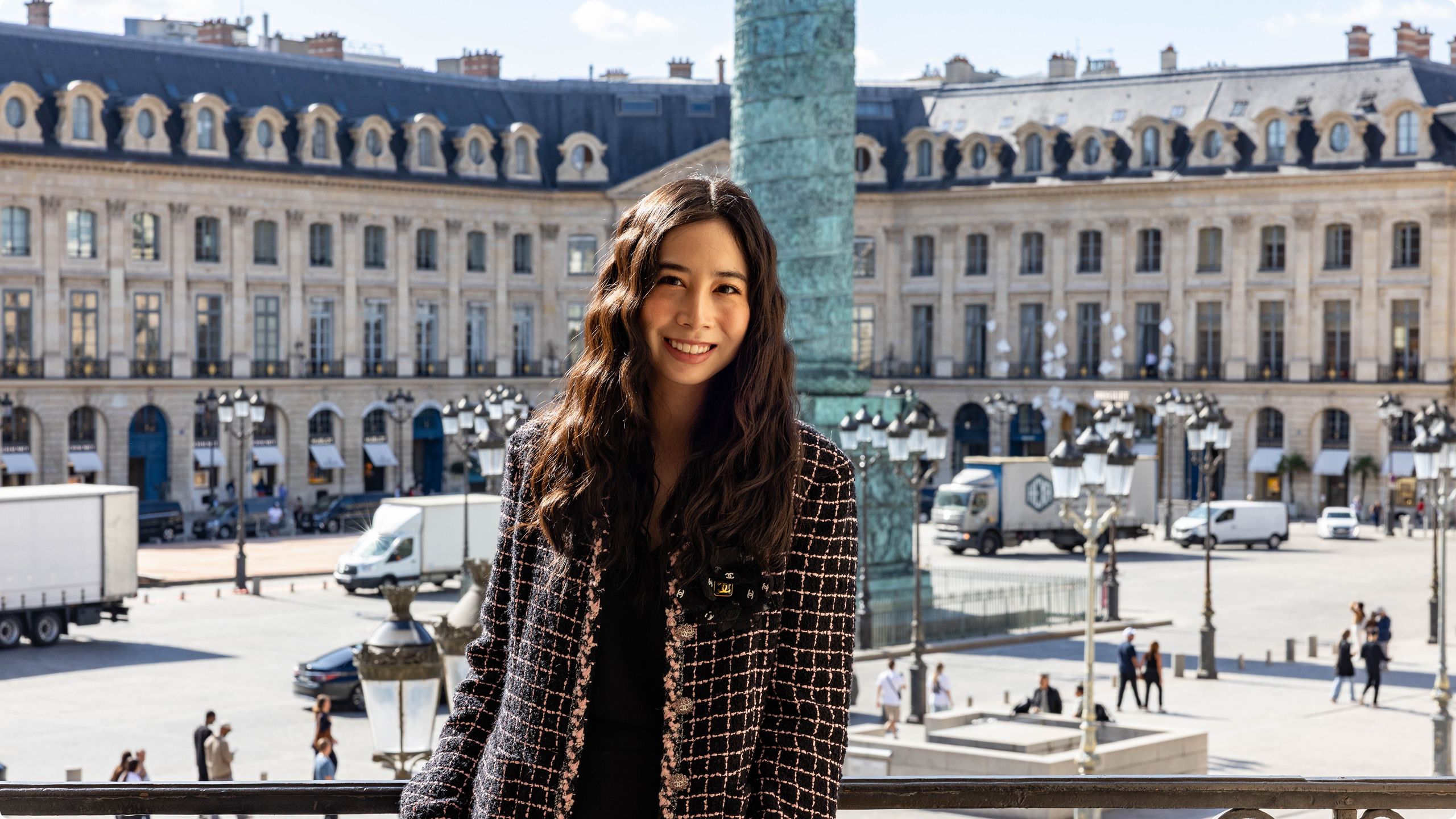
That is why the makeup of the inaugural GPHJ jury was telling. Of the ten experts assembled around jury president Fabienne Reybaud — architects, curators, gemologists, editors and auction-house leaders drawn largely from Europe — only one came from Asia: Chayapa Chutrakul, founder of the leading communications and event agency for luxury brands, Bureau of Wonders, and among the youngest voices on the panel.11
Her presence was a deliberate choice. As Reybaud explained it:
“I asked Chayapa to be a member of the jury of the first GPHJ because she has a great knowledge of the luxury and jewellery market. She has what we call in France a real eye — a true expertise and a great taste. Moreover, it was important for me to bring to the jury someone from the younger generation, and also from Asia, in order to make our jury more international. I would like to thank her for her availability, her kindness, and her elegance.”
— Fabienne Reybaud, President of the GPHJ jury
What that perspective brings to the table is a particular discipline of looking. When a piece is presented in the immersive theatre a maison builds around it — in the salons of the Place Vendôme, where a house surrounds its creation with its history, its hands and its intent — Chutrakul’s first question is not simply whether the work is beautiful. It is whether it will resonate in the Asian market. And the answer, she holds, reveals itself in the savoir-faire: in the effort a maison invests not merely in the object, but in showing how its heritage and craftsmanship translate the conviction of the house and its designers into a living piece of art. A jewel that carries that weight of intent travels; one that is merely decorative does not.
That is no small responsibility. A jury decides what the field will call excellent for a year, and the verdict ripples outward into what collectors covet and what the next generation of designers aspires to make. To bring an Asian eye to that decision — to the way a stone is read, a silhouette understood, a heritage weighted — widens the very definition of what counts. Recognition institutions that globalise their gaze will keep their authority; those that do not will slowly cede it to the markets they failed to see.
05 THE IMPERFECTIONS THAT PROVE THE POINT
None of this means the awards are beyond criticism, and honesty about their flaws only strengthens the case. Entries are voluntary and carry a cost, which is why two of the most powerful names in watchmaking, Rolex and Patek Philippe, simply decline to take part — and a prize cannot crown what never enters.12 Juries drawn from within an industry will always face fair questions about independence. But notice what these debates reveal: people argue about the fairness of these awards precisely because the awards matter. No one litigates the integrity of a billboard. Prestige is contested only when it is real.
Advertisements are rented; their effect ends when the spending stops. An award is owned, and its verdict outlives the campaign.
That is the lesson of Monaco. A brand can spend its way into a buyer’s field of view, but it cannot spend its way into their respect. Respect is granted by others — by experts willing to stake their judgement, by institutions whose approval is scarce because it is hard-won. The houses that understand this will keep entering the room and submitting to the verdict, because one night on the jury’s right side does more for authority, desirability and enduring value than a year of advertising ever could. The campaign fades. The laurel stays. And in a world that has learned to distrust everything it is sold, the thing that cannot be bought is the only thing left worth having.
CREDITS:
Composite image by BOW. Source images courtesy of GPHJ Monaco and GPHG; GPHG photograph by G. Maillot / point-of-views.ch.
REFERENCES & SOURCES:
- Katerina Perez — “The Night Monaco Shone: GPHJ 2025 High Jewellery Winners” (Chanel’s Grand Prix for the Sweater necklace; the inaugural edition at the Salle des Étoiles), November 2025. katerinaperez.com
- Nielsen, Global Trust in Advertising — word-of-mouth recommendations trusted by ~83–84% of global respondents, the most trusted source; recommendations from people one knows trusted by over 90%. nielsen.com
- Nielsen / MarTech — trust in TV, magazine and newspaper advertising fell roughly 20–25% over a short period, with paid formats trusted by under half of consumers. martech.org
- Revolution Watch — “The 20 Winners of the 2025 GPHG Awards”: Breguet Classique Souscription 2025 took the “Aiguille d’Or” Grand Prix; the GPHG as the “Oscars of watchmaking,” November 2025. revolutionwatch.com
- Grand Prix de la Haute Joaillerie (official) — first-edition rules: pieces of €100,000+, natural stones only, 18/22/24k gold or platinum, with jury viewing in Paris. gphj-monaco.com
- Hairspring — “How Fair Is the GPHG?”: a public-interest foundation since 2011 under Canton of Geneva oversight, independent of any single brand, with its preselection Academy and jury, November 2025. hairspring.com
- Wikipedia — Grand Prix d’Horlogerie de Genève: founded 2001; widely regarded as the most prestigious awards in the watch world. en.wikipedia.org
- Kapferer, J.-N. & Bastien, V. — The Luxury Strategy: Break the Rules of Marketing to Build Luxury Brands (Kogan Page) — luxury inverts conventional marketing, leading with dream, heritage and rarity.
- Abacademies — “Brand Equity in the Luxury Market: A Study of Consumer Perceptions and Premium Pricing”: ~71% of consumers cite brand image as important; premium pricing perceived as justified, enhancing desirability and perceived quality, 2025. abacademies.org
- JCK — “World’s ‘Most Revered’ Jewelers Compete at New Grand Prix Event”: the full 2025 GPHJ roster, including New Talent winner Sahag Arslanian alongside heritage maisons. jckonline.com
- WWD — “Monaco’s Next Grand Prix Is All About High Jewelry”: the ten-member jury and Chayapa Chutrakul’s roles (founder of The Pink Lab; executive director of Directions Group Thailand); confirmed in the Bangkok Post and Monte-Carlo SBM press materials. wwd.com
- Oracle of Time — “How Does the Grand Prix d’Horlogerie de Genève Work?”: entries are voluntary; Rolex and Patek Philippe decline to participate. oracleoftime.com